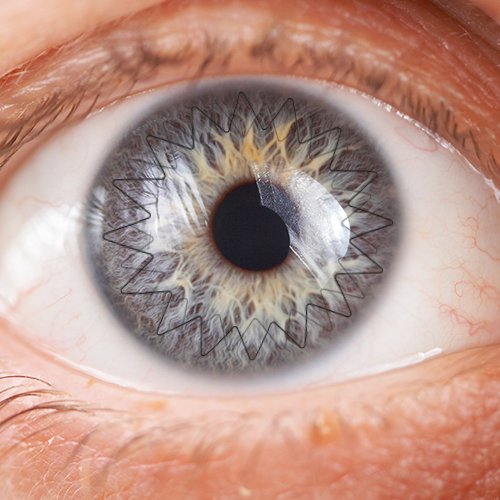
Complex microsurgical interventions (keratoplasty, vitreoretinal surgery and others)
Keratoplasty is a surgical procedure aimed at restoring the shape and function of the cornea, removing congenital defects and deformities after injuries and diseases. This operation consists of replacing the cornea with a donor or artificial graft, which is given a specific shape using software modeling. The transplant can be moved to the thickness of the cornea, which is located in the anterior layers of the cornea or replaces them.
The operation is performed under local anesthesia. The ophthalmic surgeon determines the diameter of the cornea to be removed and a donor cornea of appropriate size is applied to the location of the removed cornea. Donor tissue is attached to the remaining peripheral part of the patient’s own cornea. At the end of the operation, the ophthalmic surgeon uses a special device - a keratoscope to check the uniformity of the attachment of the cornea. It is very important that the lens of the “created” cornea is as flat as possible and that its surface does not differ from the right sphere.
When do you need keratoplasty?
Corneal pathologies requiring keratoplasty include:
- keratoconus in advanced stages;
- various types of corneal cataracts - burns and dystrophic;
- congenital and acquired corneal dystrophies;
- corneal scars after injuries, surgeries and inflammation;
- traumatic defects of the cornea.